
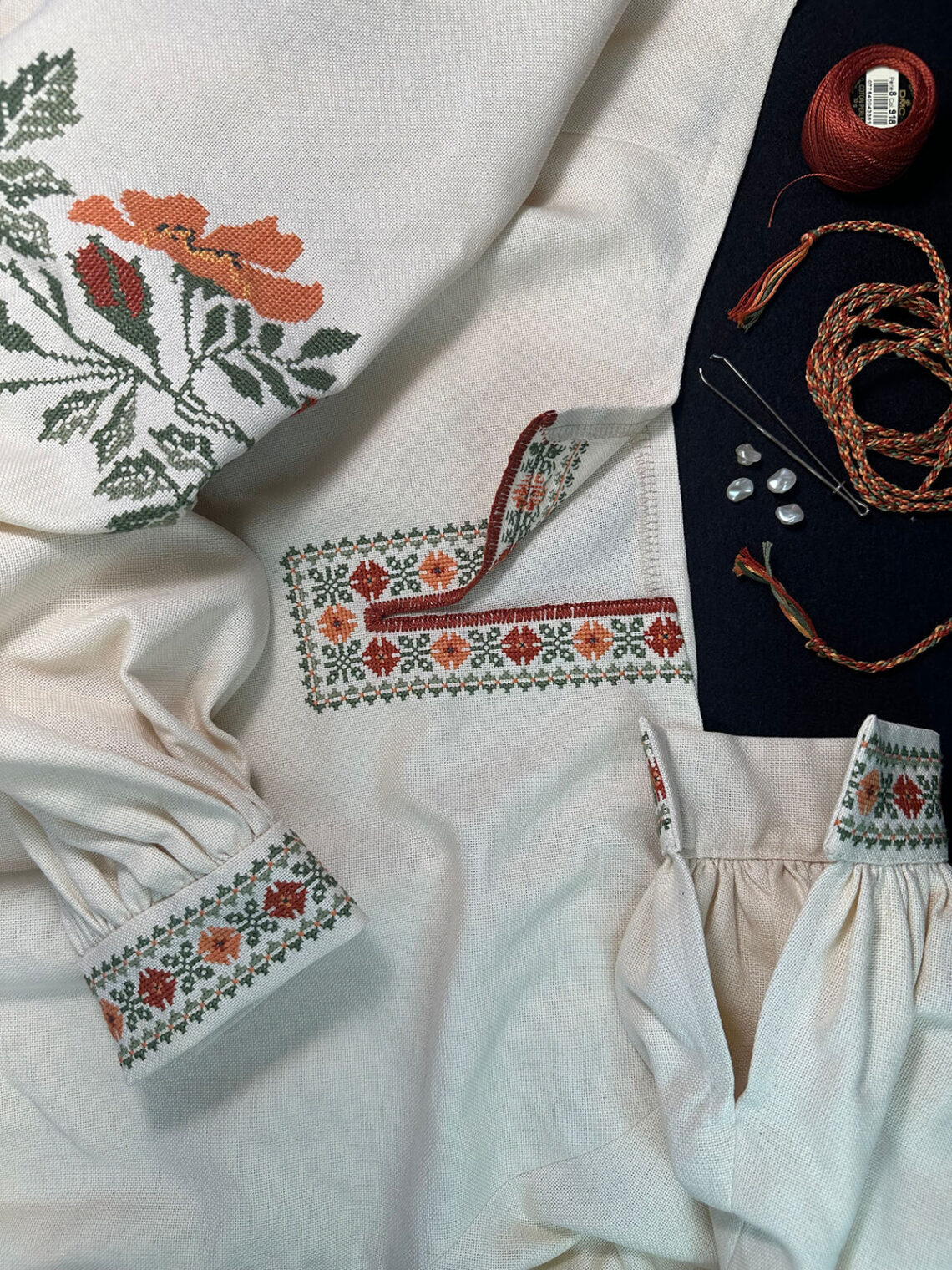
This is the last installment of a four part series on making a Ukrainian vyshyvanka blouse.
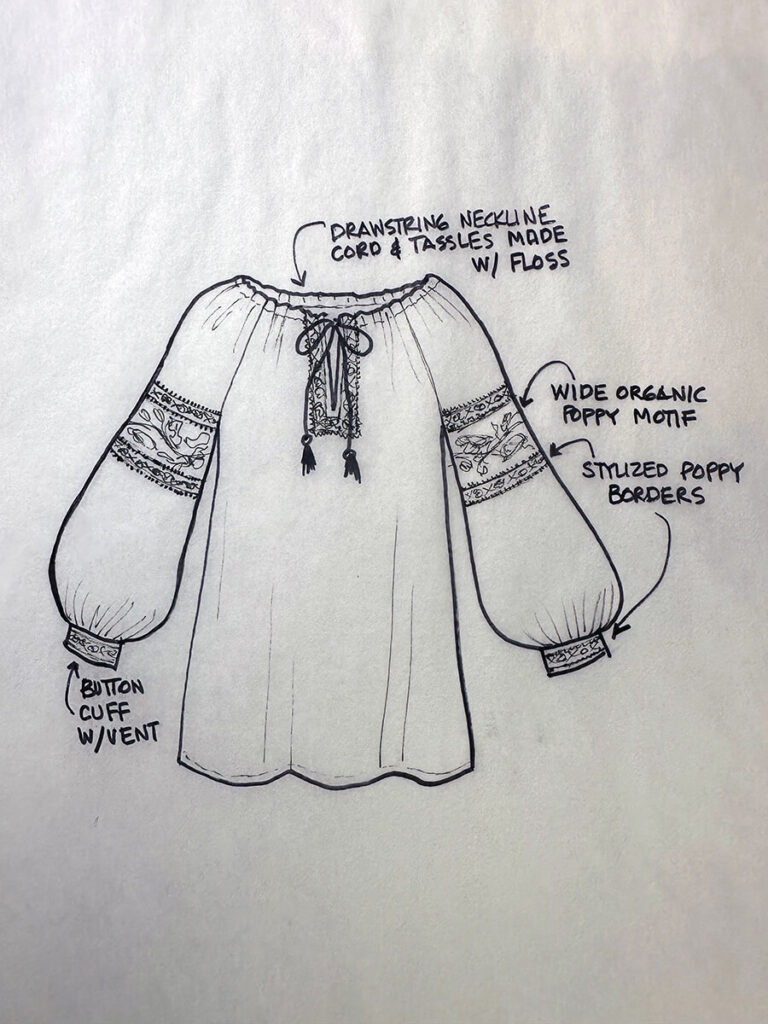
It seems the hours I spent pondering color selection, embroidery motifs and blouse design paid off. I am very happy with how my Ukrainian vyshyvanka is progressing.
I did make one edit to my original design. Once embroidered, organic poppy motif on the sleeves turned out wider than I had envisioned. As a result I decided to forego adding the stylized borders on the sleeve bands. The motif is beautiful on its own and the borders are unnecessary.
Now that I have the cross stitch embroidery completed, it’s time to assemble the parts and pieces into a full fledged vyshyvanka blouse and add all of the finishing touches.
The Neck Opening Finish
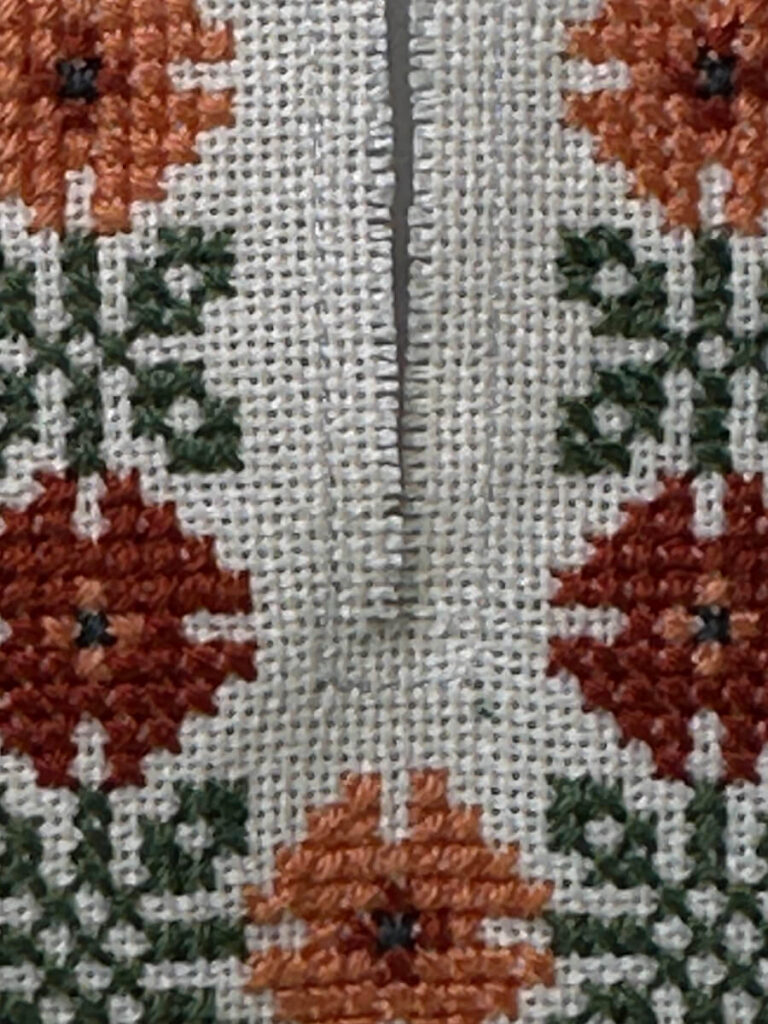
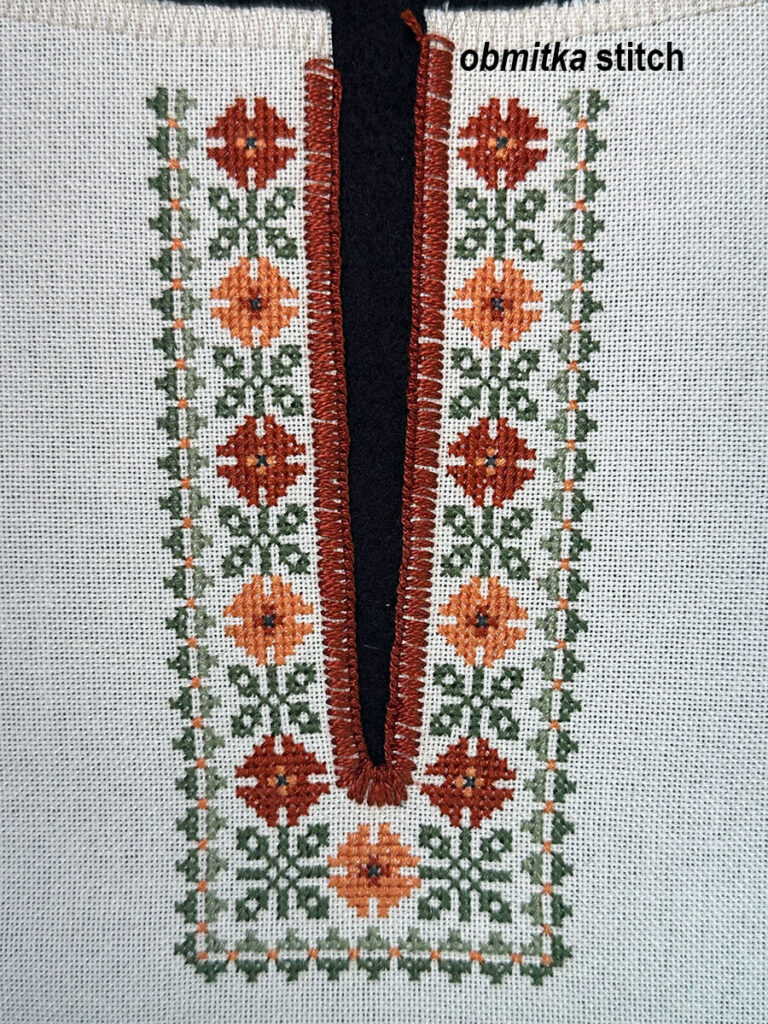
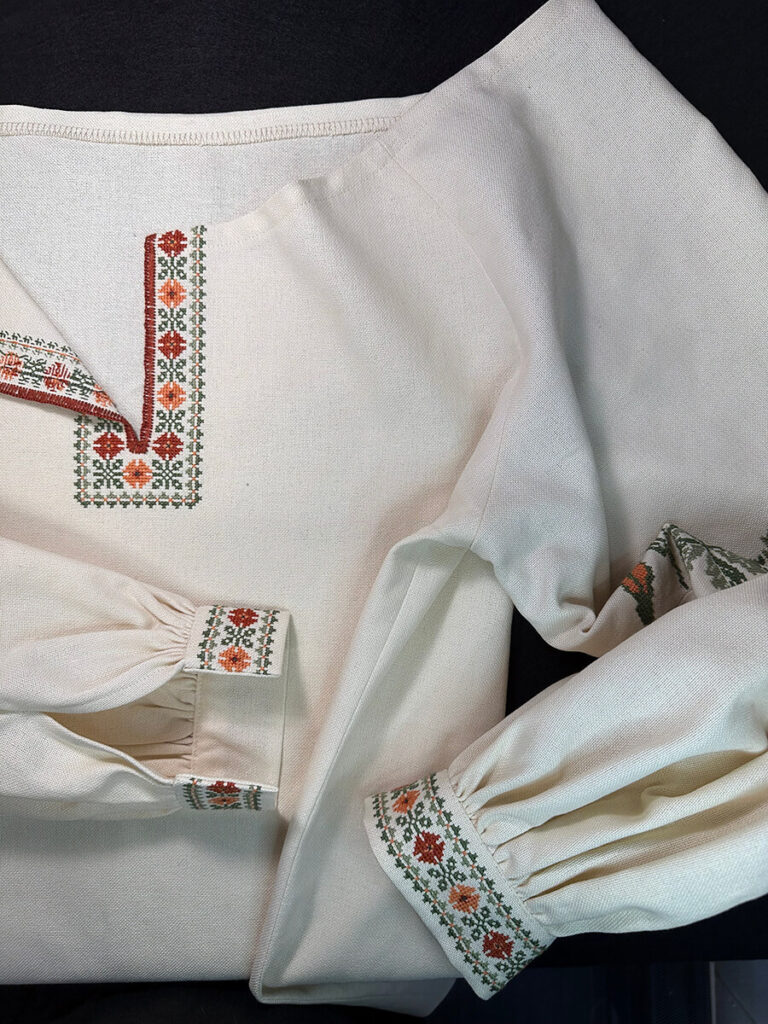
Before sewing the blouse together, it’s important to cut and sew a sturdy finish at the neck opening. This area must withstand the stresses of pulling the blouse on and off. I did not want to add facings, as per the instructions in the original Style Arc Anita pattern. Instead, I wanted to use the traditional finish technique of binding the edges of the opening with an obmitka handstitch. Obmitka is the same as a buttonhole stitch. By using this technique, I am essentially treating the neck opening as a huge, open ended buttonhole.
To begin, I carefully cut the opening down the center between the two border motifs. In order to minimize fraying while sewing, I stabilized the cut opening with a 2mm machine stay stitch. I then used a tiny bit of Fray Check to further stabilize the edges.
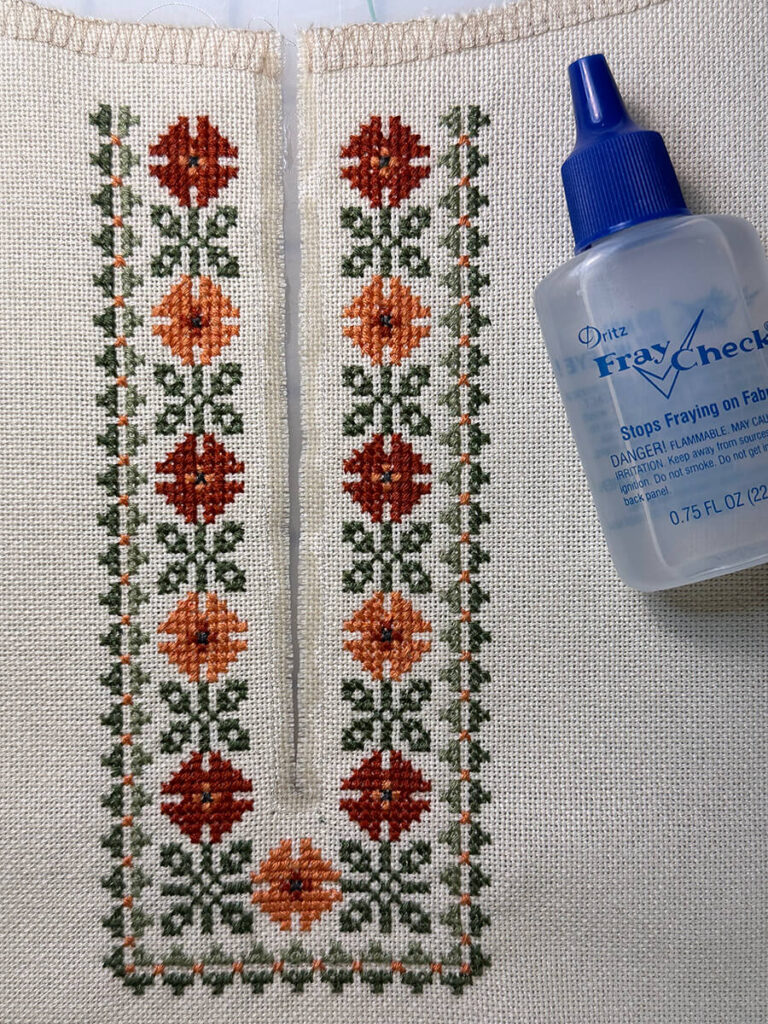
Mastering the Obmitka Stitch
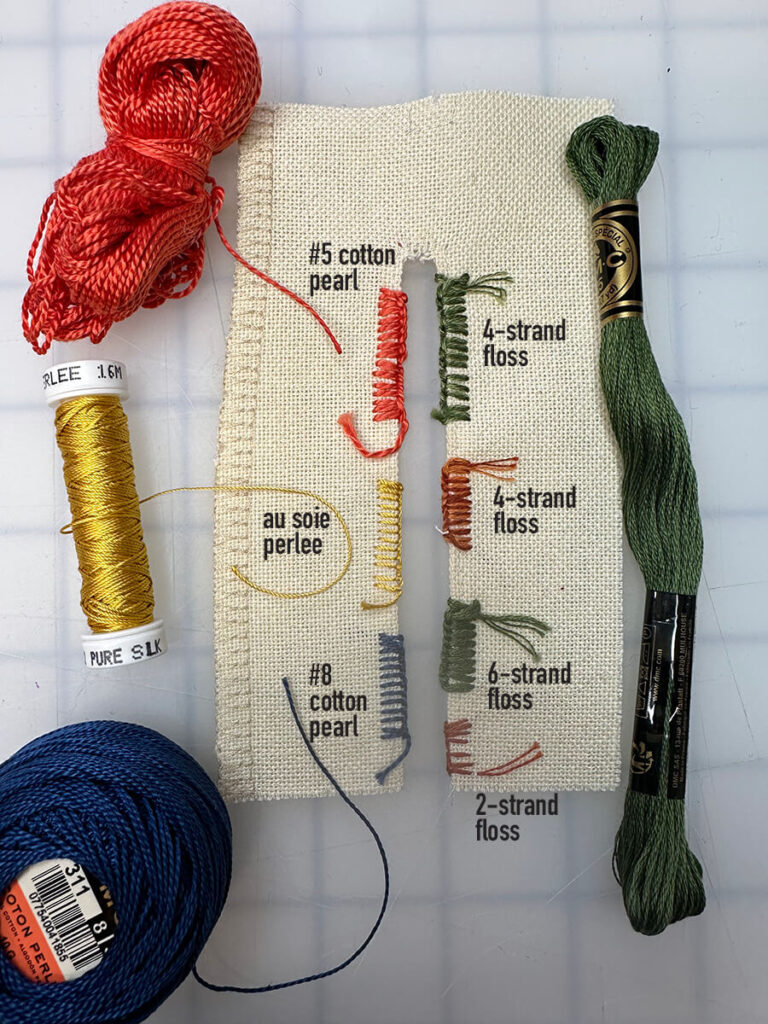
I began by practicing the obmitka stitch on a scrap of evenweave, experimenting with various threads types to determine which would give me the nicest result. At first I used the same DMC cotton embroidery floss that I used for the cross stitching. I tried 2-strand, 4-stands and 6-strand, and I just didn’t like the floss. The results looked sloppy or bulky.
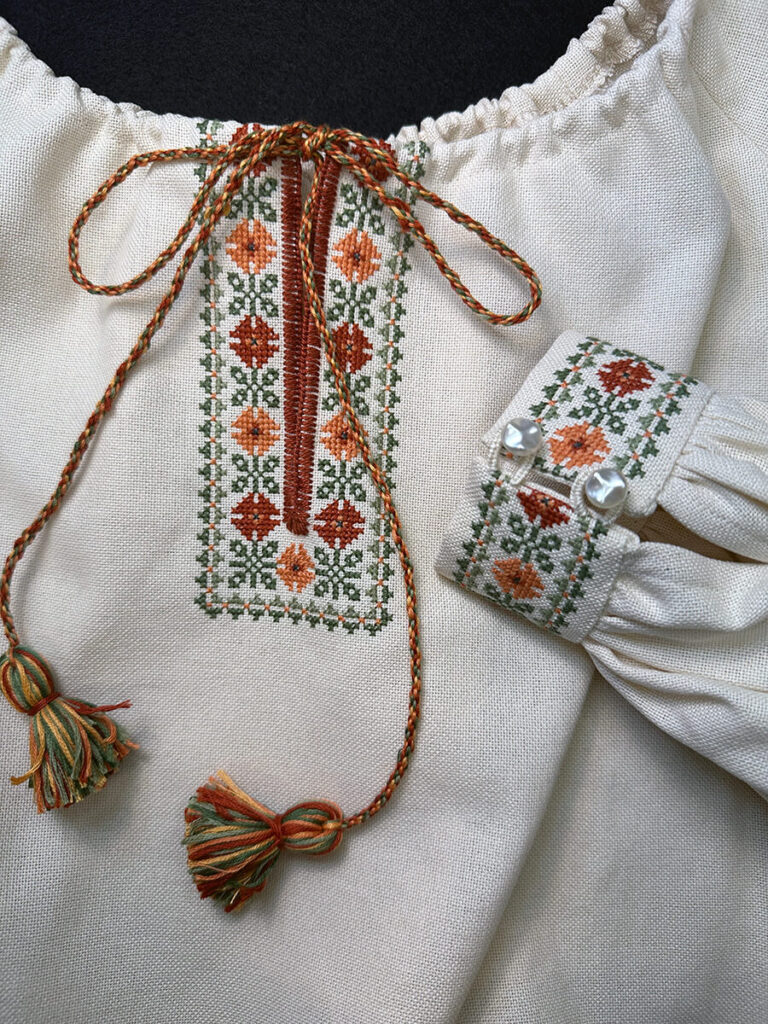
Although I didn’t have the right color, I tried some #5 and #8 DMC perled cotton thread. #5 was just too thick. But for this purpose, the #8 perle cotton looked promising – much neater and more even looking. As a lark I also tried some silk embroidery thread – Au Ver Perlee Soie. Even though it produced nice stitches, the silk was too shiny compared to the cotton cross stitching. I ended up settling on #8 DMC perle cotton. Off to the embroidery shop to pick up a ball of dark rusty orange to match the embroidery! Threading my tapestry needle with a double strand of perle cotton, I sewed a 5-thread wide stitch every 2-threads to get a nice row of pearls along the edge.
Constructing the Balloon Sleeves
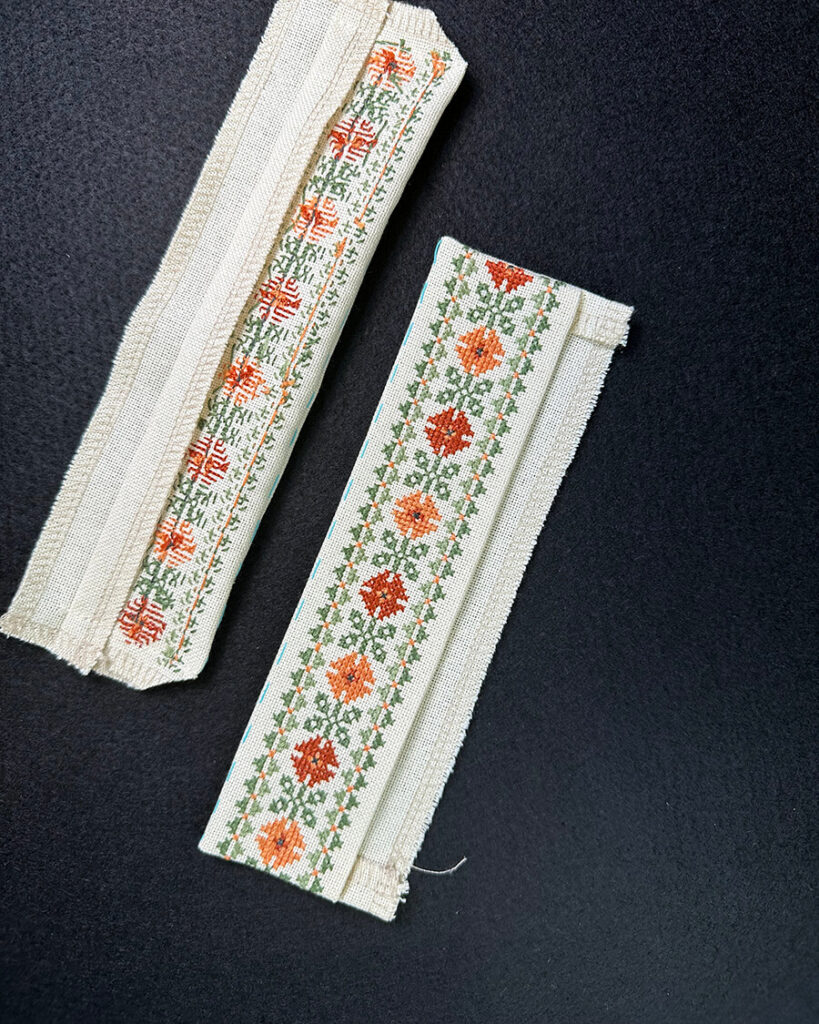
I started with the cuffs. After folding the embroidered cuff pieces right sides together, I pressed up the embroidered long side by .5″. Using a .5″ seam, I sewed the two short ends. Corners clipped, cuffs were turned to the right side using a corner tool to get a nice sharp corner.
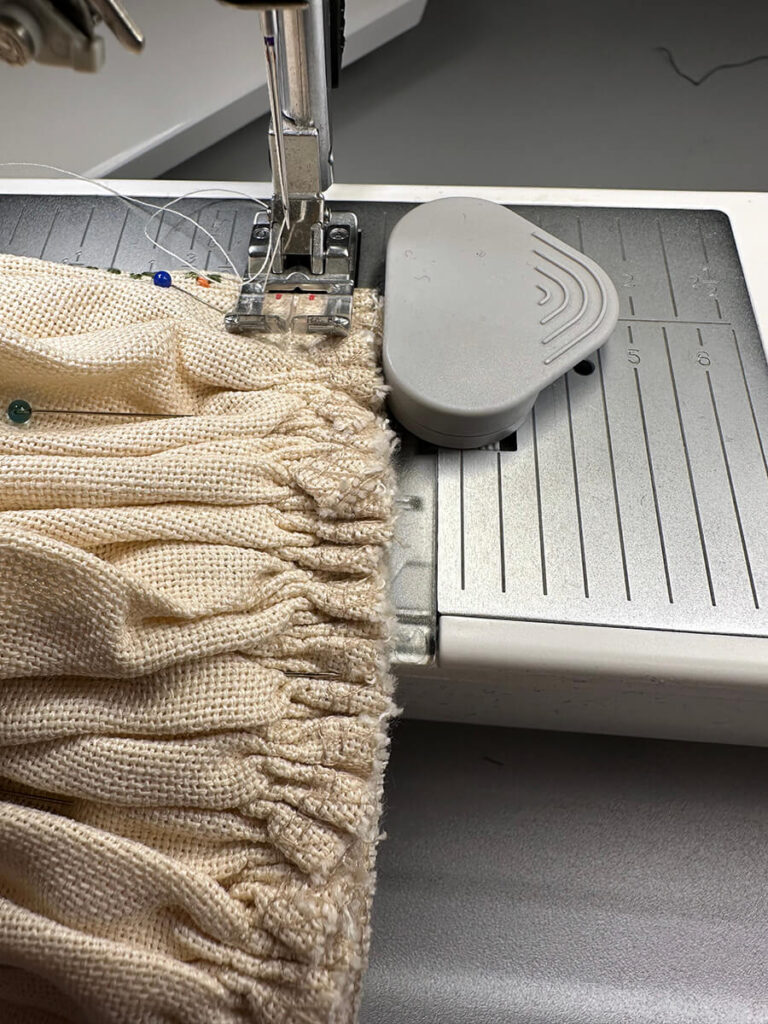
The next step is to prepare the sleeve pieces. To create a sturdy sleeve vent, I stitched a 3″ long narrow hem at the wrist end of each sleeve. After that, the wrist end of the sleeve are stitched with a double row of machine basting stitches. These basting stitches are then gathered tightly to fit within the width of the cuff piece.Then, the inside face of the cuff is carefully machine stitched the gathered sleeve end. Turning the cuff to the embroidered side, I then encased the gathered edge inside the cuff with an invisible slipstitch.
Sewing the Body of the Blouse
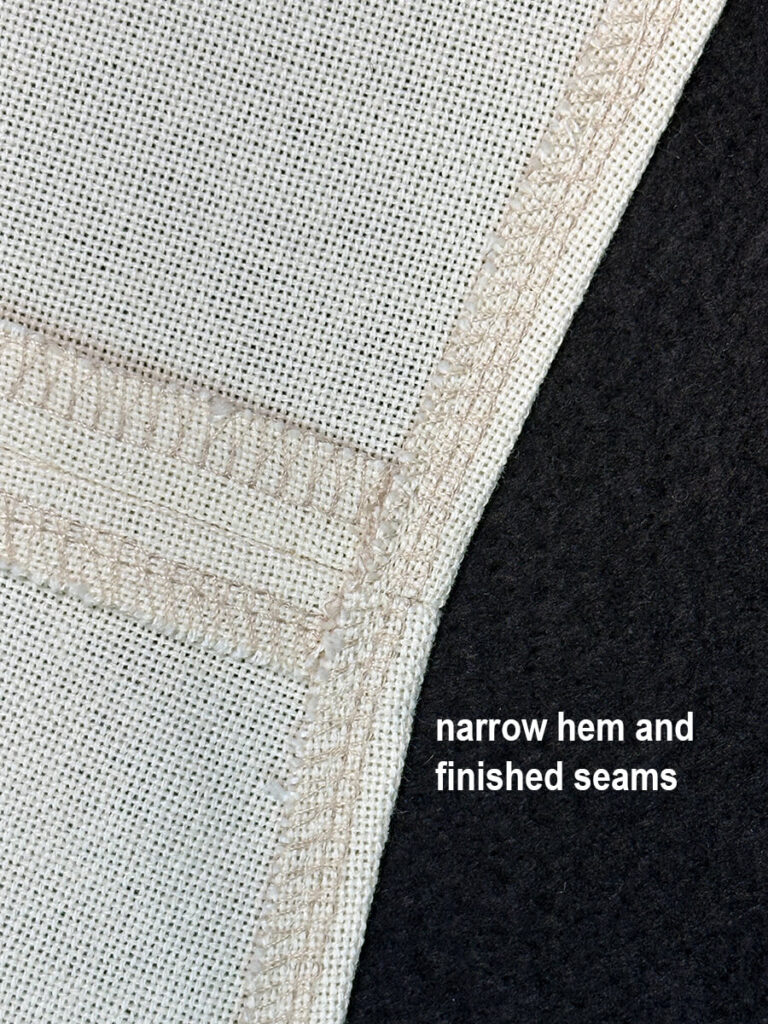
Without a doubt, sewing the body of this blouse together is the easiest part of the process. For one thing, all seams were prefinished as I had previously overlocked all the edges during the preparation phase of the project. This Ukrainian vyshyvanka is a very simple construction with raglan sleeves, a neckline casing for a drawstring, and a narrow hem. I started by sewing the angled raglan part of the sleeve to the blouse front and back. Subsequently, I joined the sides in one long seam from sleeve vent to bottom hem. Voila! All of my seams were now nicely finished. After pressing the side seams open, I narrow hemmed the bottom edge, and sewed in the neck casing.
Braiding the Drawstring
From the onset I envisioned this vyshyvanka with a multi-colored drawstring made up of my cross stitch embroidery floss. To braid a 7-strand cord, I made a 6-inch wide circle loom from foam core board with a hole in the center and eight evenly spaced notches. knot your threads together, poke the knot through the hole and start braiding. Using 1 skein of DMC floss per color, I made a 62″ long cord. Albeit a bit too much, I’d rather trim some off than have a skimpy drawstring.
I used my trusty bodkin, to fish the drawstring through the casing. After trimming the cord to a reasonable length, I added some jolly embroidery floss tassels to finish the ends.
Finishing the Cuff Closures
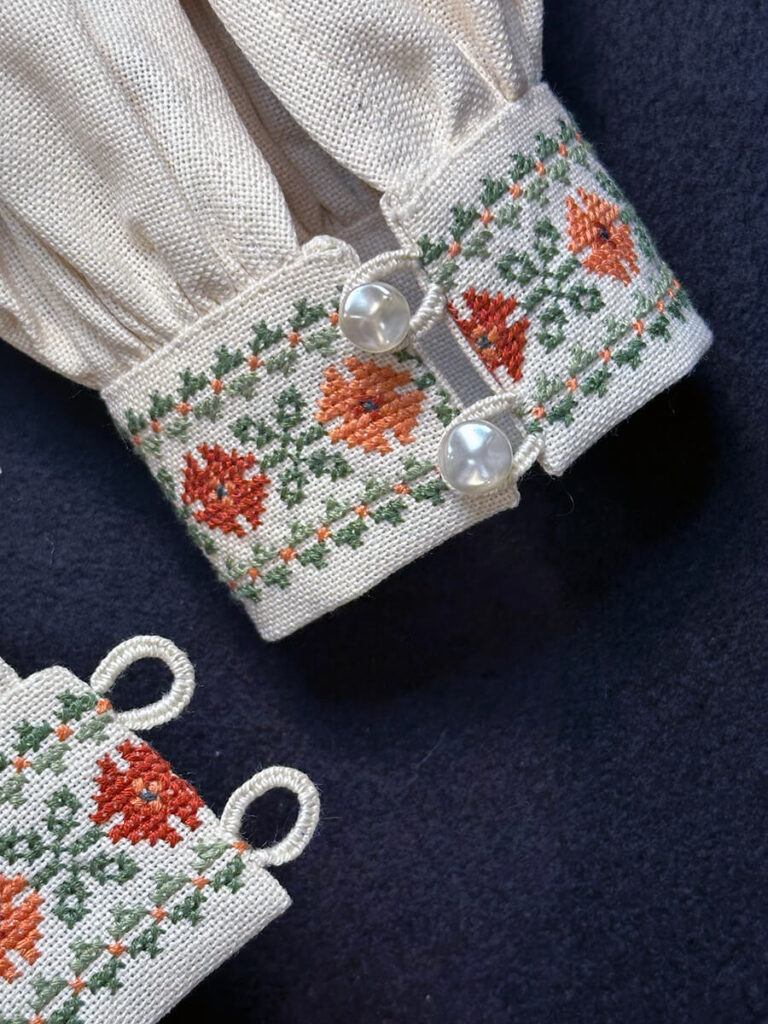
I found four lovely pearl buttons my button hoard. They are the perfect size and shape for a double-button cuff closure. After securing the buttons, I hand stitched button loops with some DMC #5 ecru perle cotton to match the evenweave fabric.
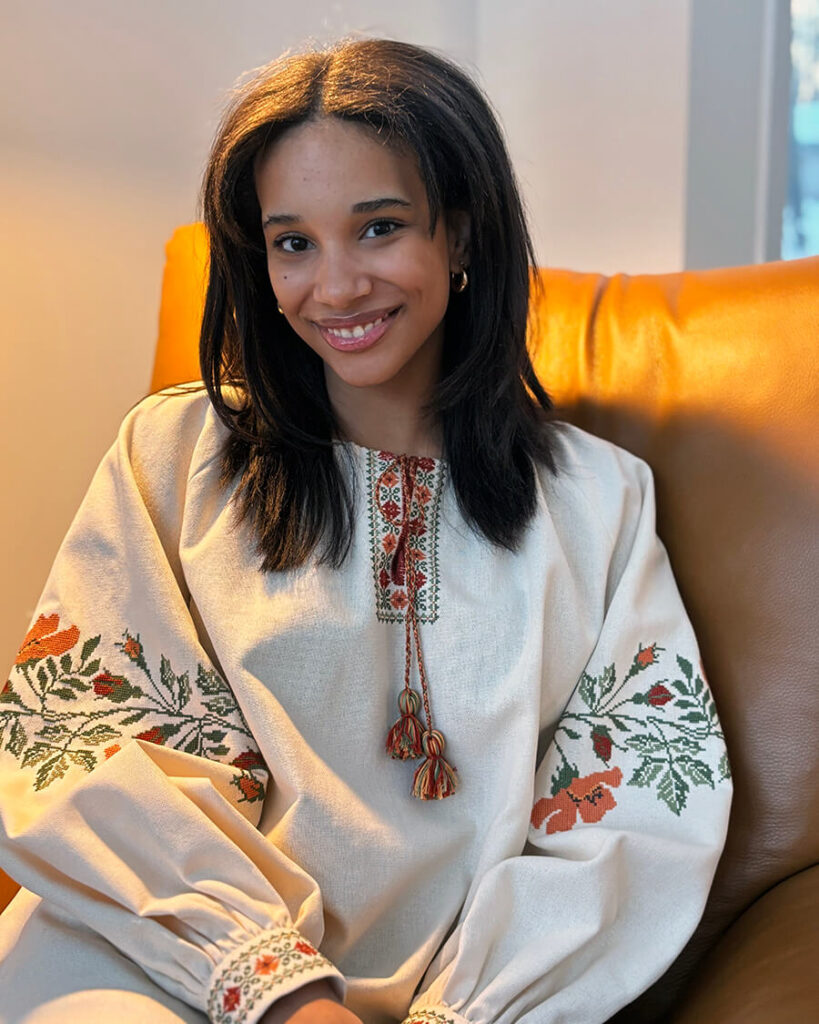
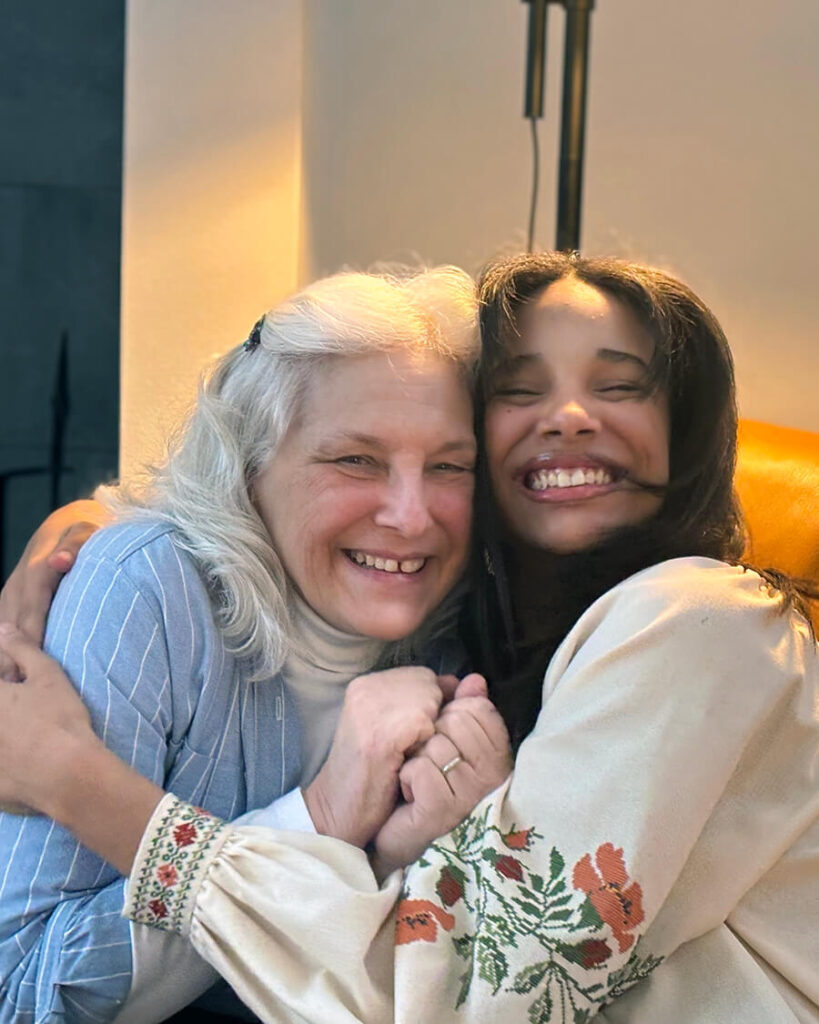
This embroidered Ukrainian vyshyvanka blouse is now complete! Though initially I planned to have it finished in time for my granddaughter Gloria’s birthday back in December, it took me longer than I foolishly anticipated to execute this project. Our Gloria is such a sweet person, and she patiently waited the extra weeks I needed to finish her MImi-made surprise.
All Passes, Art Alone Endures.
All in all it was such a joy to have refound this art that was lost inside of me for so many years. I rediscovered a tradition that revived feelings of pride in my cultural heritage, and connected me to many happy memories. Consequently, by virtue of needle and colorful thread, my granddaughter Gloria is now, also connected.
Embroidering these designs became a form of meditation – a time to savor the moment of creation and craft, to think about the women who formed my past, and the very special young woman who is beginning to fashion her future. Gloria’s vyshyvanka is a very satisfying make, and a real labor of love.
For more information on vyshyvanka planning, preparation, and technique, see my previous posts in the Handcraft section:
How to Make a Ukrainian Vyshyvanka Blouse – The Planning
How to Make a Vyshyvanka Blouse – Ukrainian Embroidery Prep
How to Make a Vyshyvanka Blouse — Ukrainian Embroidery Technique
Success is not fame or money or the power to bewitch. It is to have created something valuable from your own individuality and skill – a garden, an embroidery, a painting, a cake, a life.
Charlotte Gray

Hello,
Thank you for this post. I have wanted to make a blouse for many years. During COVID I learned how to cross-stitch. I am now sampling material before beginning the blouse. I have about 4 books on Ukrainian embroidery, Your work is lovely. No one is really making these; I have asked many people over the last couple of years, and no one knows anyone who is making these blouses (yes, you can get machine made ones, it is not the same). What material did you end up getting and where did you get it from?
I hope you continue your embroidery!
Tammy
Hi Tammy! I’m excited for you to begin your vyshyvanka project! For my granddaughter’s vyshyvanka I went full on traditional in fabric choice and used an evenweave fabric called Lugana by Zweigert.
There’s a lot more detail on fabric choice is in the first post of my four part Vyshyvanka series: https://makelings.com/2024/11/23/how-to-make-a-ukrainian-vyshyvanka-blouse-the-planning/.
I’m getting started on a new vyshyvanka for myself right now. This time I’m using a lightweight 100% linen fabric and water soluble waste canvas.
Happy stitching, and Slava Ukraini!
I am so happy and grateful to have found your post. Your info is very good & will be useful for me. I’m very scared to start my project because I’ve never made a Vyshyvanka. I have two daughters that I would like very much to make one for each so that they have something from their mother that was hand-made. I have not been able to find authentic, hand embroidered only Vyshyvankas and decided I’m going to go for it. I recently inherited from my parents after their passing in ’21’ & ’23’ the embroidered pillow cases and Rychnyky that they left behind. I grew up speaking Ukrainian and doing everything Ukrainian, school, church, dance, singing, Plast & camp, Pysanky, & cooking, except learning how to embroider but did learn except the basic cross stitch. My children, 1 son & 2 daughters do not speak Ukrainian (I tried teaching them & a stepdaughter when they were young), but one is learning the language with a woman from Lviv. They are 2nd generation of American -Ukrainians and are very good at cooking all the traditional Ukrainian foods. Hopefully my 2 girls can someday learn to embroider. They moved to Colorado & I’m still in Massachusetts. We all feel what the terrible war has done to Ukraine & its people. I pray that peace comes soon.
I will be gathering my material sometime soon but first need to do some research based on your info, then write out a plan and perhaps try to find videos on the step by step of sewing a Vyshyvanka. I don’t fully understand how how to embroider directly on the blouse using that material?that later you have to pull threads..If you have any ideas or other helpful info, I would greatly appreciate it if you can share with me. I’m sorry my comment is so long. Thank you again, Slava Ukraini, Heroyam Slava!
HI Elizabeth – Thanks for commenting on my post! It sounds like your upbringing was very similar to mine, except I was a CYM kid 🙂
There are five vyshyvanka posts in the Handcraft section of my website, with details, pics and videos for planning, prepping, stitching and finishing a vyshyvanka. I also list some resources for where you can buy supplies. The best advice I can give you on making your vyshyvanka blouses is to just dive in – research, and maybe buy some supplies and do a little practice stitching… just like when we were kids, start with making a little bookmark.
Regarding waste canvas -“that material that later you have to pull threads”. This blouse I made for my granddaughter was done in the traditional method, embroidered directly onto an evenweave fabric. You can read about the two options I call “traditional” and “modern” in this post:
https://makelings.com/2024/12/07/how-to-make-a-vyshyvanka-blouse-ukrainian-embroidery-prep/
I just posted recently about a vyshyvanka I made for myself, where I used water soluble waste canvas vs. traditional waste canvas.
https://makelings.com/2025/08/01/how-to-make-a-more-modern-take-on-a-traditional-ukrainian-vyshyvanka-blouse/
Please feel free to get in touch through the “contact” on my website if you have any questions. I’m more than happy to help you make your vyshyvanka dreams come true.